

Currently Empty: $0.00
The Digital Seal
Understanding and Using Your Seal · Lesson 3
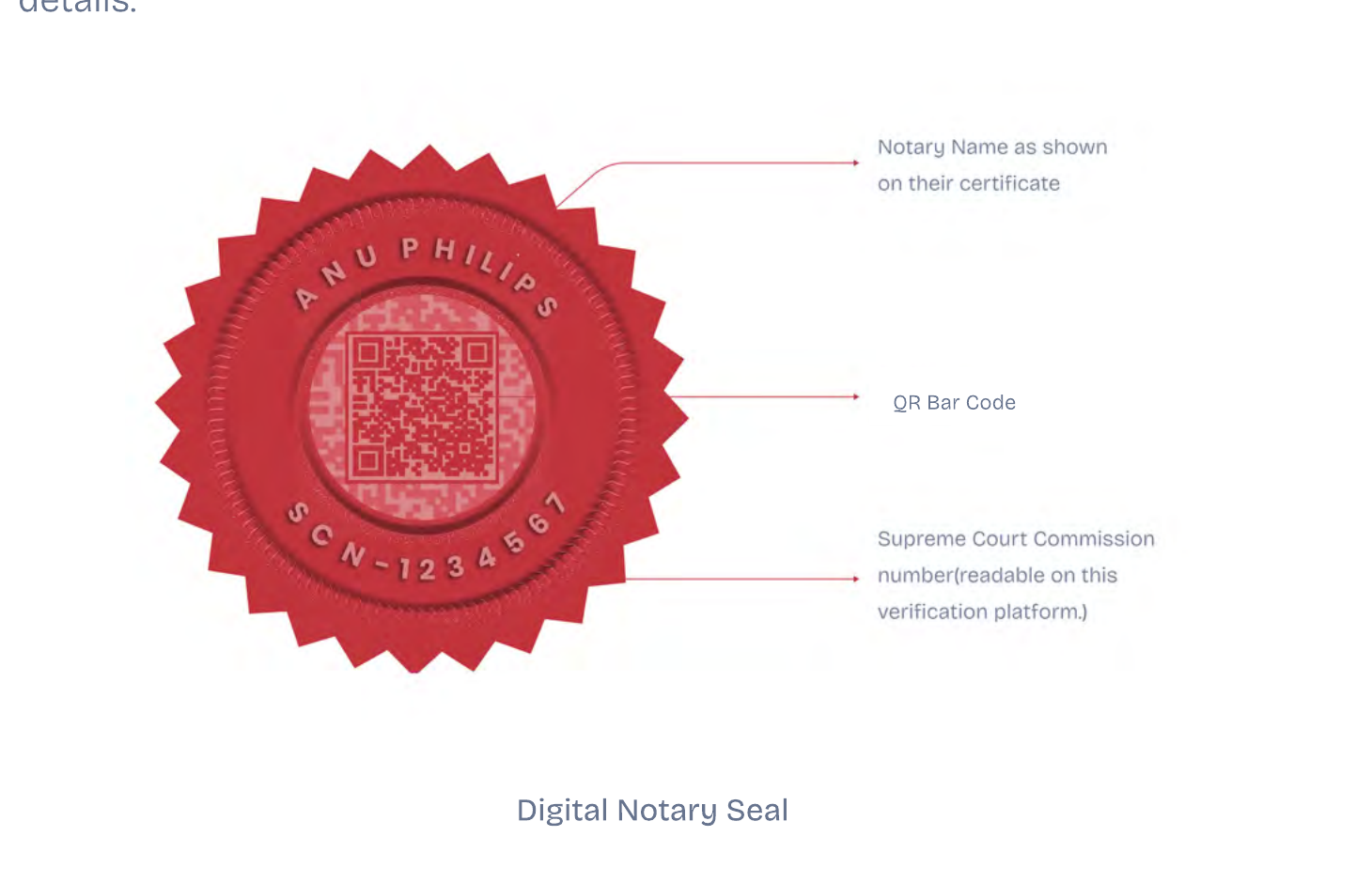
For electronic notarisations, your seal becomes a digital element. In practice, it is either an identity backed image of your physical seal with a unique ID, or a cryptographic electronic signature that serves the same function.
|
1
|
It must carry the same identifying information
Your name, role, and SCN, either visible in the image itself or embedded in its metadata, the same as a physical seal.
|
|
2
|
It is backed by a cryptographic certificate
Regulations require you to use an approved digital notarisation platform that ensures the seal is tamper proof and tied to your verified identity.
|
|
3
|
It can carry a scannable verification code
Many electronic seals embed a QR or Azted code, scannable with any smartphone camera, that links directly to verification on the electronic notary register.
|
|
For document integrity, your digital seal is typically anchored to a time stamp or QR code, and the certificate ensures any post notarisation changes are detected. Two records give you that proof.
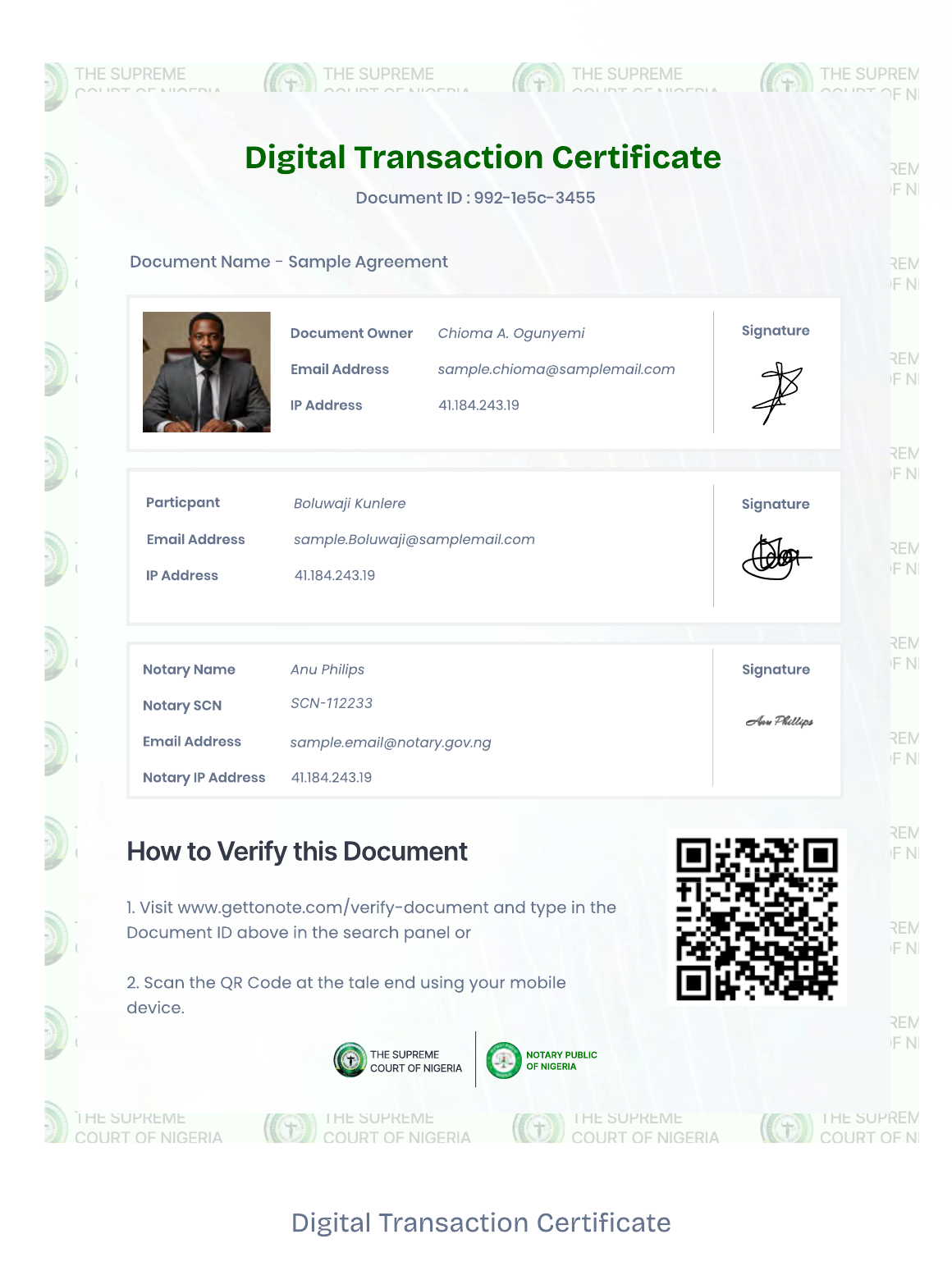
The Digital Transaction Certificate, generated automatically on session completion
|
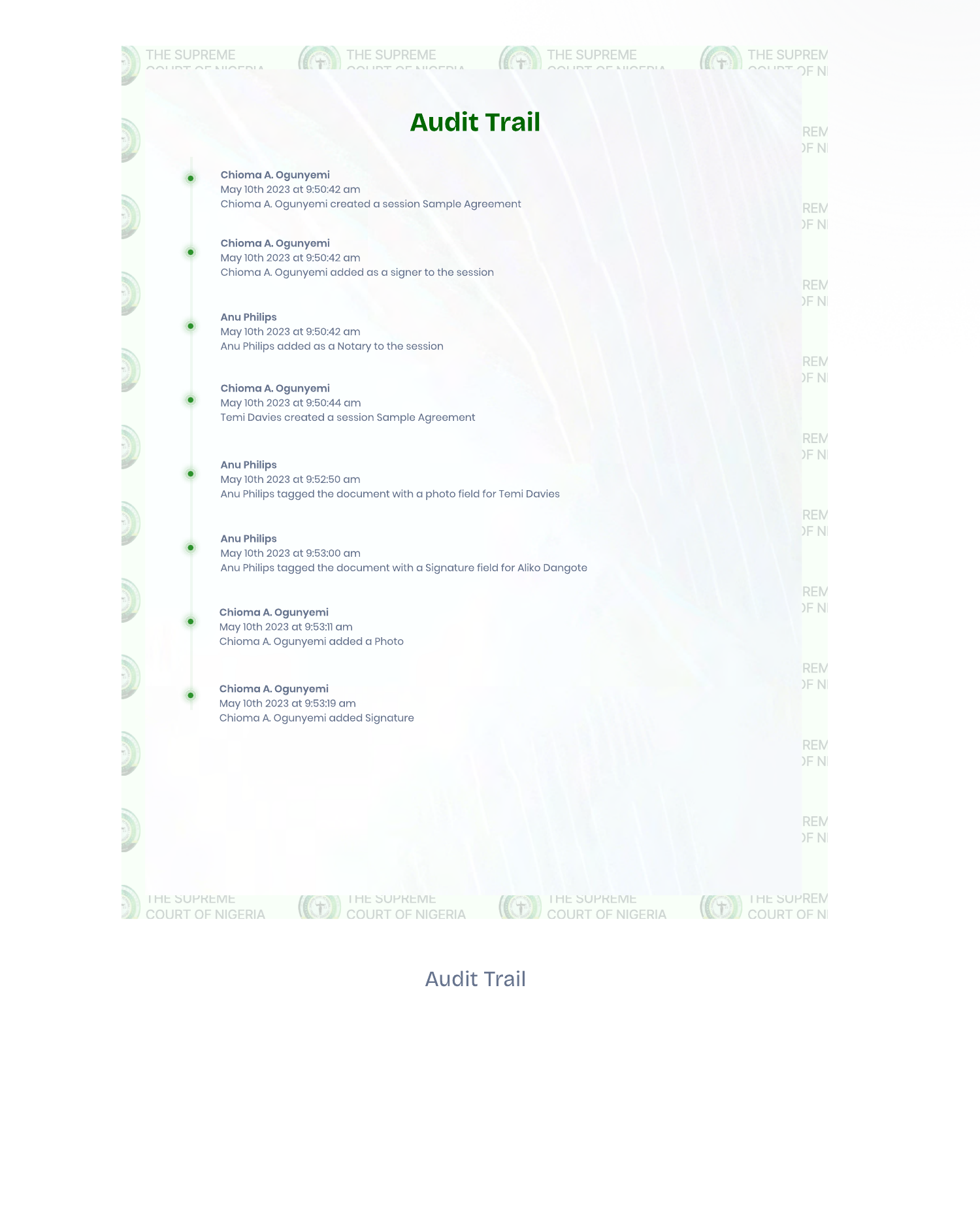
The accompanying audit trail, retained for a minimum of six years
|
|
Nigeria’s regulations mandate encryption protocols and multi factor authentication for seal use. Every verification, of you, your seal, and the document itself, is linked back to the Electronic Notary Register.
|